• Agricultural research often treats food system problems as simple technical hurdles, relying on linear, mechanistic models that fail to address non-linear, complex realities
• Fragmented, project-based funding and siloed scientific disciplines act as “locks” that prevent organizations from moving beyond ad-hoc interventions to genuine transformation
• Achieving global food security requires “systems literacy”, an institutional shift toward integrated systems knowledge, adaptive governance, and long-term, flexible investment
By Glenn Concepcion

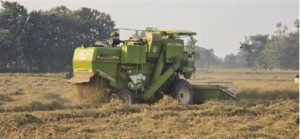
As the global community grapples with a “polycrisis” of climate change, geopolitical instability, and rising food insecurity, the traditional tools of agricultural development are hitting a wall. For decades, the primary strategy of agricultural research for development (AR4D) has been a “hard” mechanistic approach: developing a high-tech solution and attempting to scale it linearly across the globe. However, a groundbreaking new study published in Agricultural Systems suggests that this reductionist mindset is no longer enough to transform our food systems.
The research, led by Hanna Ewell and an international team of scientists, including experts from various CGIAR centers, argues that the key factor in global food security is “systems literacy”. Defined as the capacity to understand and operationalize diverse systems approaches for specific problems, systems literacy is the difference between treating symptoms and addressing root causes.
The CGIAR case study: A mirror for global research
The authors focused their investigation on CGIAR, the world’s largest global research partnership for food security. With over 50 years of history, CGIAR provides a unique lens into the struggle of modern science to adapt to complexity. Despite a long-standing commitment to systems-aware research, ranging from farming systems research in the 1970s to recent food systems narratives, the study found that systems thinking remains underutilized, ad-hoc, and scattered within the organization.
Through a literature review and 19 in-depth interviews with researchers, donors, and practitioners, the study revealed a significant capability gap: while many claim to take a systems approach, the reality is often heuristic rather than genuinely systemic.
The five lenses of Systems Thinking
To move beyond surface-level buzzwords, the researchers highlighted five distinct methodologies that a system-literate organization should be able to navigate:
• Mechanistic: Treating systems like engines to be optimized for efficiency.
• Interrelational: Mapping feedback loops and unintended consequences.
• Organismic: Viewing systems as living, co-evolving entities.
• Purposeful: Surfacing diverse stakeholder viewpoints to find common ground.
• Emancipatory: Critically asking whose interests are served and amplifying the voices of the “voiceless,” such as the environment and marginalized groups.
The study found that AR4D currently leans heavily on the mechanistic lens, often overlooking the social and political power dynamics that determine whether a new technology actually helps those in need.
Structural “locks” preventing change
Why is it so hard for scientific organizations to think systemically? The researchers identified several structural barriers that “lock in” old ways of working:
1. Siloed Disciplines: Advanced scientific training encourages researchers to go deep into a narrow subject, often ignoring the broader landscape effects of their work.
2. Projectified Funding: Most research is funded through short-term project cycles. Donors often demand measurable, linear impacts, like “number of farmers reached”, which discourages the long-term, messy work of systemic change.
3. The “Impact or Implode” Mantra: Researchers feel pressured to promise impactful results to secure funding, leading to a focus on low-hanging fruit rather than complex, transformative solutions.
The three pillars of Systems Literacy
To overcome these barriers, the study proposes a framework for strengthening systems literacy through three interdependent pillars: Systems Knowledge, Systems Governance, and Systems Investment.
Systems Knowledge requires a shift in mindset. Researchers must move from being objective outsiders to recognizing themselves as actors within the system. This involves drawing on diverse evidence, including the lived experiences of marginalized communities, to identify bottlenecks and anticipate trade-offs.
Systems Governance focuses on steering complex social situations rather than just solving technical problems. This means creating inclusive spaces where shared visions can be negotiated, ensuring that those affected but not involved have a seat at the table.
Systems Investment calls for a radical departure from rigid project cycles. The authors advocate for funding portfolios with long-term horizons, allowing for adaptive learning and even “failure” as a necessary part of the research process.
From “providers” to “stewards”
The ultimate goal of systems literacy is to help organizations like CGIAR evolve into “stewards” or “custodians” of systemic change. Instead of merely delivering a new seed variety, these organizations would work to change the “entire iceberg”—the underlying beliefs, power structures, and policies that keep food systems stuck in inequitable patterns.
“There is no systems transformation without systems literacy,” the researchers conclude. As the world faces increasingly complex challenges, the ability to see the connections between climate, land, water, food, and people is not just beneficial, it is a necessity for truly transformative and sustainable change.
Read the full study:
Hanna Ewell, Eva Valencia Lenero, Arwen Bailey, Lennart Woltering, Katharina Schiller, Jon Hellin
No systems transformation without systems literacy: Insights from CGIAR
Agricultural Systems, Volume 234, 2026
https://doi.org/10.1016/j.agsy.2026.104662