- Innovation alone did not guarantee higher profits; market access, quality assurance, certified seed production were the strongest drivers of income.
- Smaller groups that managed production, processing, and marketing themselves captured more value from the seed business.
- Combining seed production with other income-generating activities helped women build resilience to climate and market risks.
By Myrtel Anne G. Valenzuela, Dr. Swati Nayak, Dr. Muhammad Ashraful Habib, Dr. Sk Mosharaf Hossain, Ms Subhasmita Mohapatra, Saidul Islam
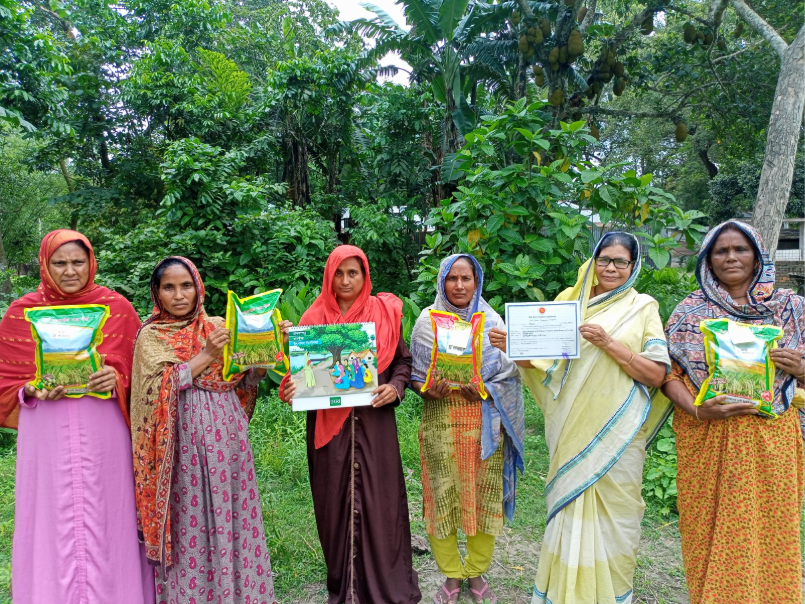
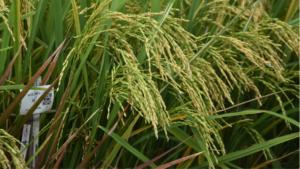
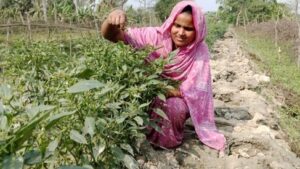
In rural Bangladesh, women are playing a growing role in the rice sector through the Community-Based Rice Seed Entrepreneurship Model (CBRSEM). Designed to strengthen local seed systems, the model equips women with the training, technical support, and business skills needed to produce, process, and market quality rice seed within their communities. It also links them to certification services, financial institutions, and market opportunities, enabling them to move beyond traditional farm labor and become entrepreneurs in the seed value chain.
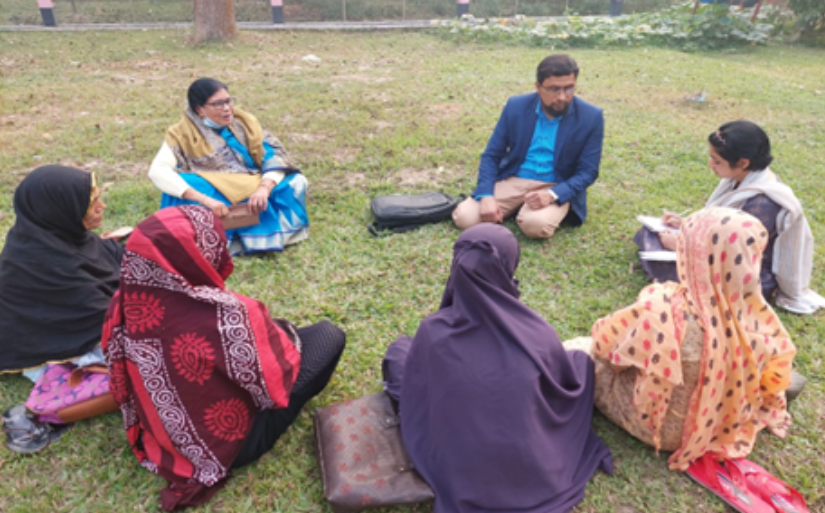
A recent study of five women-led rice seed producer groups found that success depends on more than training and technical support alone. Financial performance was influenced by factors such as leadership, access to markets, participation in the value chain, and the ability to diversify income sources. Some groups increased profits through certified seed production and stronger market linkages, while others strengthened household resilience by combining seed enterprises with other livelihood activities.
Their experiences offer lessons for development practitioners, researchers, and policymakers seeking to strengthen women-led enterprises and build more sustainable rural livelihoods.
Innovation-focused leadership doesn’t always deliver higher returns
It is easy to assume that leaders who encourage innovation will also generate the highest financial returns for their groups. However, the study found that this is not always the case.
In Barishal, the Moddho Rakudia Women’s Group (MICWG) embraced digital tools and new approaches, making it one of the most adaptable and innovative groups in the study. Yet despite its openness to innovation, the group did not generate the highest income from seed production.
Meanwhile, women-led seed producer groups in Narchi and Bamunia earned significantly more from seed sales. Their leaders placed greater emphasis on producing certified seed and linking members to profitable markets, helping the groups capture higher returns.
The findings suggest that while innovation-focused leadership can help groups adapt and improve their operations, higher incomes depend largely on market opportunities and products that command a premium price. Visionary leaders may help a group innovate and adapt, but strategic leaders position it to grow and capture greater value.
Bigger groups don’t always earn more
Many development programs assume that larger groups have an advantage because they can reach more people and sell more products. The study found a more complex picture.
One of the largest organizations examined was the Khoddokomorpur federation (KNUS), which has more than 1,000 members. Although hundreds of members are involved in seed production, income from seed sales is spread across a much larger organization, creating a “profit-sharing drain” that reduces individual earnings.
By contrast, specialized smaller groups, such as the Narchi Women Seed Producer Group (NWSPG), with just 32 members, retained more of the value they created. Members managed production, processing, packaging, and marketing themselves, allowing them to capture a larger share of the final selling price.
The findings suggest that growth is not always about increasing membership. In some cases, “scaling up” membership can actually mean “scaling down” individual take-home pay.
Certification opens the door to higher-value markets
One of the clearest findings from the study was the financial advantage of producing certified seed.
Many farmer groups begin by producing Truthfully Labelled Seed (TLS), a category that allows farmers to market seed based on their own quality declaration. While TLS provides an accessible starting point, it often limits access to higher-value markets.
Groups producing certified seed earned substantially more. During the Boro season, the Narchi Women Seed Producer Group earned as much as 130,000 BDT (~1,000 USD) per acre from certified seed production. In comparison, the Khoddokomorpur federation, which mainly sold TLS, earned around 20,000 BDT (~160 USD) per acre.
Buyers were willing to pay a premium for certified seed because it provides greater assurance of quality, purity, and germination performance. Certification also opened doors to larger markets beyond the local community.
The results show how quality standards can influence profitability, helping farmer groups move from low-margin markets into more competitive and rewarding value chains.
Diversification builds resilience
Not all successful groups depended entirely on seed production.
The Moddho Rakudia group operates in an area that regularly faces flooding and salinity problems. These environmental risks make farming more difficult and less predictable.
To reduce their vulnerability, members diversified their sources of income. In addition to rice seed production, they invested in poultry raising, dairy enterprises, and services linked to a Virtual Call Center (VCC).
As a result, group members reported some of the highest household incomes in the study, often exceeding 200,000 BDT (~1,600 USD) annually despite relatively modest earnings from seed production.
The experience highlights the importance of diversification in climate-vulnerable areas. When one source of income is affected by extreme weather or market fluctuations, other activities help sustain household livelihoods.
Technology helps, but it isn’t enough
Digital tools are becoming increasingly important in rural agriculture. Women in the study used mobile phones, weather apps, WhatsApp, and the bKash digital payment platform to improve communication, manage transactions, and access information.
In the Moddho Rakudia Women’s Group (MICWG), younger members formed a “Youth Digital Group” that helped older producers use digital technologies. Acting as a bridge between generations, they supported activities such as accessing weather information, using digital payment systems, and communicating with customers.
However, technology alone did not guarantee higher earnings. While digital tools improved efficiency and communication, seed income remained relatively low because the group lacked a certified product. Digital tools may provide the fuel, but certification is often the engine that drives higher returns.
The study suggests that digital technologies work best when they support strong business models rather than replace them.
Conclusion
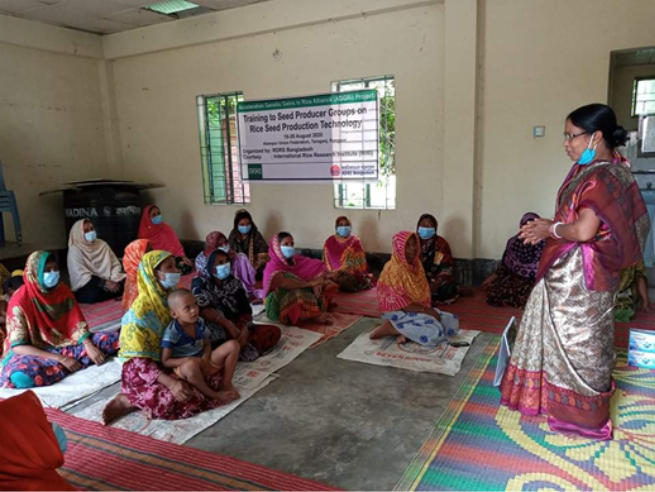
The experiences of women-led seed enterprises in Bangladesh show that successful rural businesses are built on more than technical training alone. Leadership, market access, product quality, and diversified income sources all play important roles.
The groups that achieved the strongest results were not necessarily the largest or the most technologically advanced. Instead, they were often the groups that connected quality products with market opportunities, retained more value within their businesses, and developed multiple pathways for generating income.
Read the paper:
Swati Nayak Muhammad Ashraful Habib, Subhasmita Mohapatra, Saidul Islam, Sk Mosharaf Hossain
Interlinking behaviour, technology, and roles in women rice seed producer groups of Bangladesh
Next Research, Volume 10, 2026
https://doi.org/10.1016/j.nexres.2026.101896